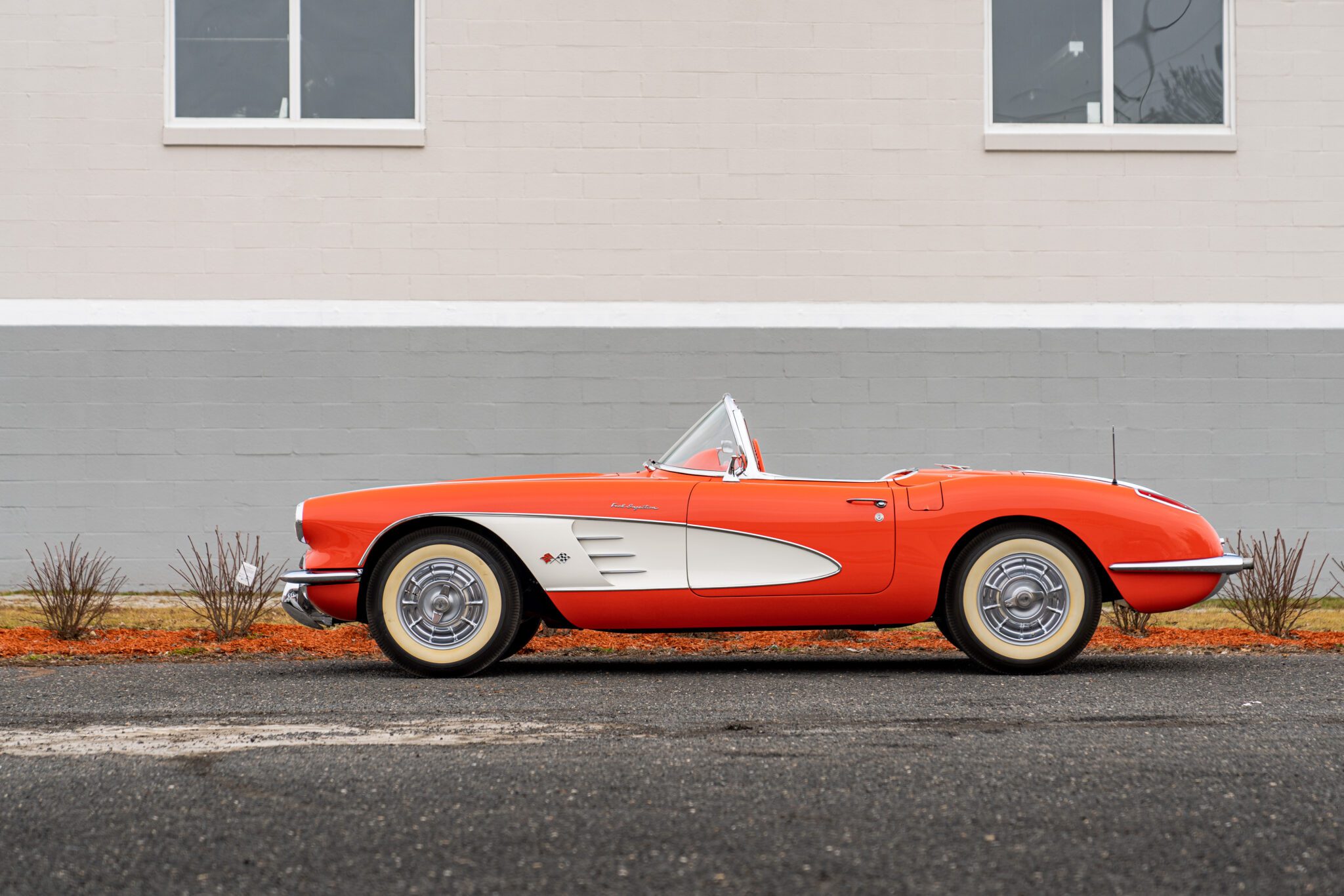
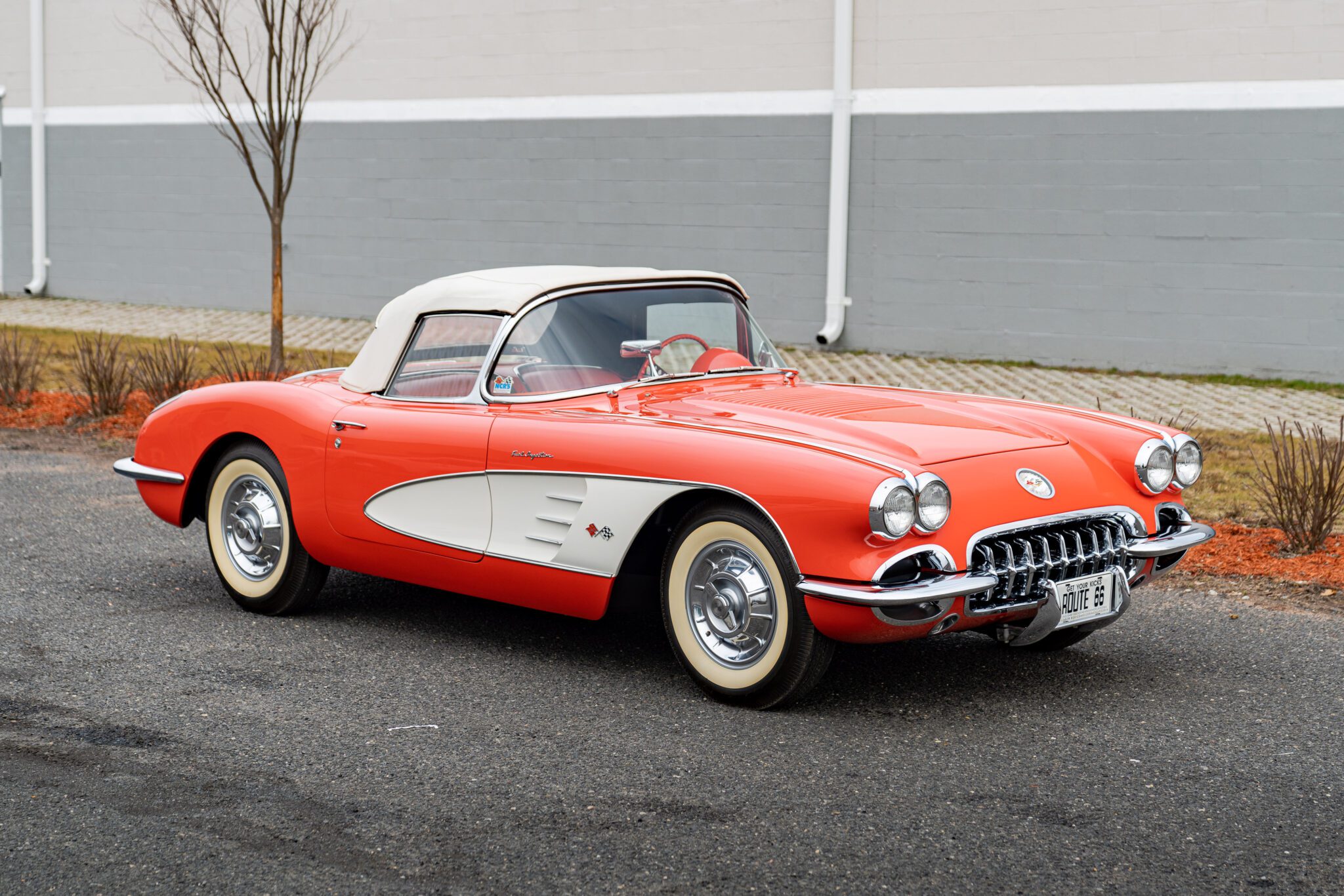
When Chevrolet began production of the 1958 Chevy Corvette, a legendary sports car that represented one of the turning points in the auto industry, it caused great excitement among American automotive enthusiasts. The Corvette had become an icon reflecting the brand’s achievements in performance and style. The 1958 model year stands out as a year in which significant changes were made in the design and performance of the Corvette.
The 1958 Corvette was the fifth model year of the first generation Corvette C1 (1953-1962), introduced in previous years. Significant improvements were made in its design in terms of originality and aesthetics. On the exterior, a revised front grille and a new rear design gave the car an elegant and dynamic look. The unique rear design of the Corvette called the “sailfish” in the reviews, managed to attract the attention of car lovers.
Under the hood of the 1958 Corvette was the famous Small-Block V8 engine. Two options were available: a more affordable 230 horsepower 4.6-liter V8 engine or a 245 horsepower 4.6-liter twin quad-barrel carburetor V8 engine. Both engine options were quite impressive at the time and gave the Corvette solid performance. The car could be paired with a 4-speed manual transmission or the optional Powerglide automatic transmission. These features have helped the Corvette deliver a fast and exciting driving experience.
The 1958 Chevy Corvette drew attention with several innovations in its interior. Leather upholstery enhanced the driver and passenger experience by emphasizing luxury and comfort. Also offering modern features such as optional power windows and power steering set the Corvette apart from other sports cars of the time.
But the 1958 Corvette was a major turning point, not only with its exterior and performance but also with the decline in production numbers. The Corvette, which had been selling well in previous years, experienced a decline in demand in 1958. In total, approximately 9,168 units were produced and displayed a low sales chart compared to previous years. This has raised concerns that the Corvette’s future is uncertain.
However, the Corvette’s 1958 model year represented only the beginning of the legendary car’s legacy. Over time, the Corvette would be further developed and reached higher performance levels. Chevy never lost confidence in the Corvette, and this unique sports car continued to cement its place in automobile history as an icon for years to come.
»» Follow Classic Car Agenda on social media to be informed about current posts ««

After unsuccessful sales of the 1958 Chevy Corvette, Chevrolet and General Motors (GM) decided to take important steps to secure the future of the Corvette. In the 1959 model year, the Corvette was introduced, powered by more diverse and attractive features. During this period, the Corvette C1 slowly began to gain iconic status and gained popularity in American automobile culture.

Despite the challenges of the 1958 model year, the Corvette’s design and performance were continually improved. In 1961, the iconic “Dolphin Ridge” rear design was introduced on the front of the Corvette, with thinly illuminated round headlights and a more aggressive grille. Also, in 1962, the last year of the Corvette C1, its performance was further enhanced by offering more powerful engine options. The Corvette continued to be a favorite of motorists throughout the period.
After the end of the C1 series, the Corvette was replaced in 1963 with a new generation known as the Corvette C2 (Sting Ray). During this period, the Corvette gained an aerodynamic and modern design with sharper lines. The StingRay has earned a reputation as a legendary sports car that combines performance and style.
Over the years, the Corvette has become a legend that continues with different generations and models. With each new model, advances in technology and engineering have been reflected in the Corvette and won the admiration of motorists. The Corvette remained the preeminent choice as a performance car on the racetrack and in everyday driving.